
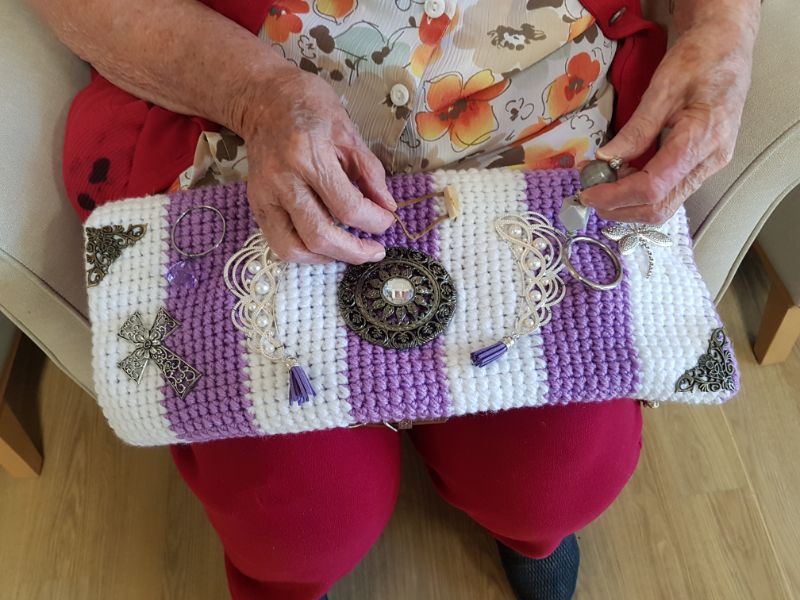
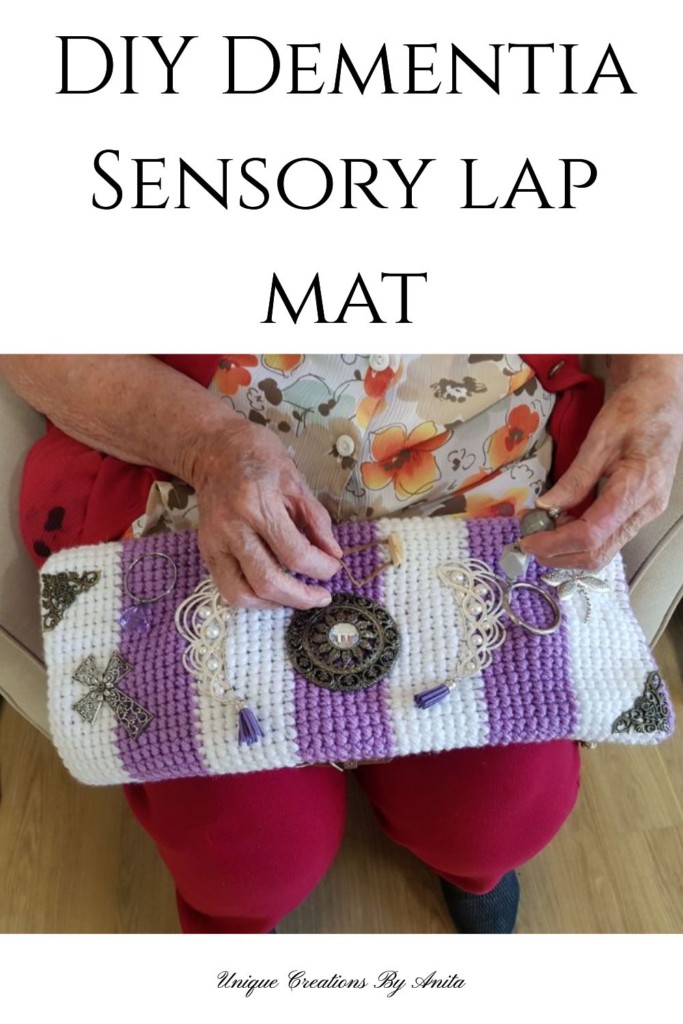
How to Make a Dementia Sensory Lap Mat (Twiddle Mat) is this month’s International Bloggers Club challenge for “Hooked on Crochet.” I can’t crochet to save myself, so I teamed up with a crafty friend for the base and focused on what I know best—turning recycled jewellery and found bits into a calming, tactile dementia sensory lap mat. These mats give restless hands a useful job, spark memories, and often ease agitation.
What is a sensory lap mat (and why it helps)
Sensory lap mats—also known as twiddle mats or fidget blankets—provide a variety of textures, gentle movements, and simple activities such as zipping, buttoning, sliding, and exploring cool or warm surfaces. The combination of tactile, visual, and subtle auditory experiences can soothe individuals, elevate their mood, and foster social connection. In my 15 years working in aged care, I have witnessed residents relax as their hands explore beads, rings, zippers, and buttons, often becoming noticeably calmer and more content.
Before we dive into this tutorial, be sure to subscribe to my bimonthly newsletter to be the first to see my latest projects. You can also follow me on Pinterest and Facebook, where I also include my unique mixed-media art projects
How to Make a Dementia Sensory Lap Mat (Twiddle Mat) from Recycled Jewellery
**This post may contain affiliate links. This means I earn a small commission on links used at no extra cost to you. Please see my disclosure policy for more information.**
Materials needed
- Crocheted base approximately 60 cm × 40 cm (lap size)
- Heavy-duty cotton or upholstery thread, hand-sewing needles, thimble
- Assorted recycled jewellery (beads, chains, tassels, pendants, large rings/hoops)
- Large focal piece (smooth stone or textured disc)
- Zipper (medium length)
- Old belt or strap with buckle (shortened)
- Large plastic/wooden beads and a shoelace or cord
- Satin or similar smooth fabric scrap for a bead “worry” tube
- Buttons and a strong cord loop
- Key on a lightweight chain (optional)
- Scissors, small pliers, metal file or emery board, Fray-Check (or lighter to seal synthetic cord)
- Optional: snap fasteners or Velcro for extra closures, fabric glue for positioning before stitching
- Adult fidget lap mat for women and men
Plan first: comfort, safety and layout
Choose pieces with pleasant textures and no sharp edges. File or sand any rough metal. Avoid tiny loose parts, magnets, hooks, pins, strong scents, or anything that can tangle fingers. Group features so hands can discover them gradually: quiet textures on one side, interactive tasks (zip, buckle, button) on the other. Tug-test every attachment before the mat goes into use.
Make the base
Start with a crocheted rectangle about 60 cm by 40 cm so it sits neatly on a lap.
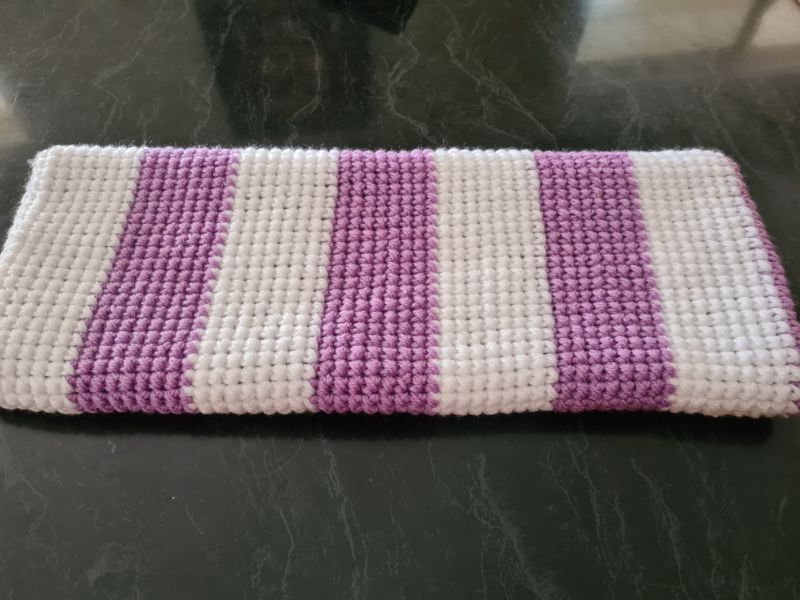
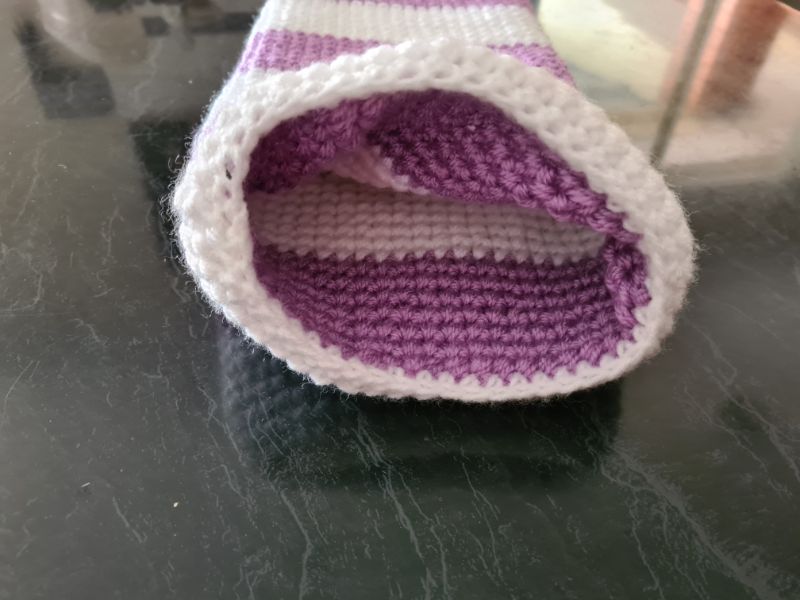
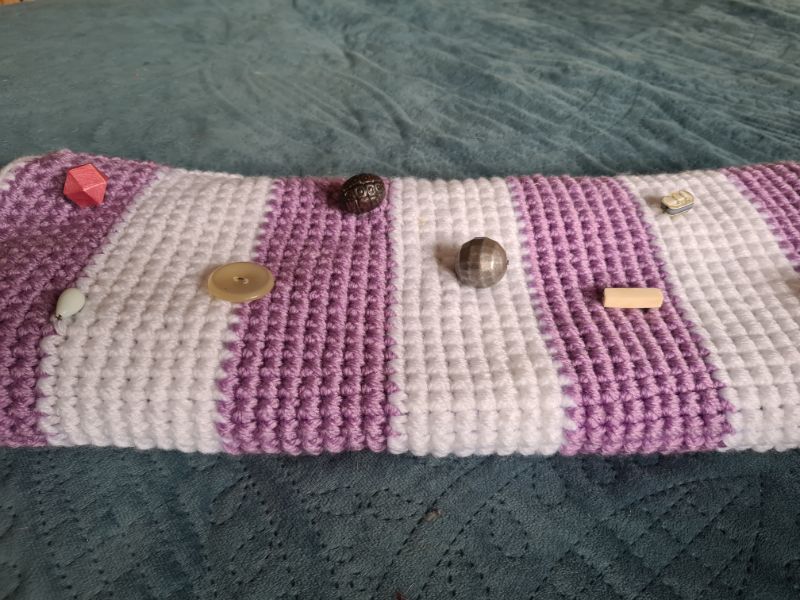
If you’d like hidden fidgets, leave both side seams as tubular channels. I kept the sides open and sewed beads inside each tube so the patient can slide their hands in and feel the items.
Add tactile features (textures first)
Anchor the calm textures first so they frame the interactive pieces.
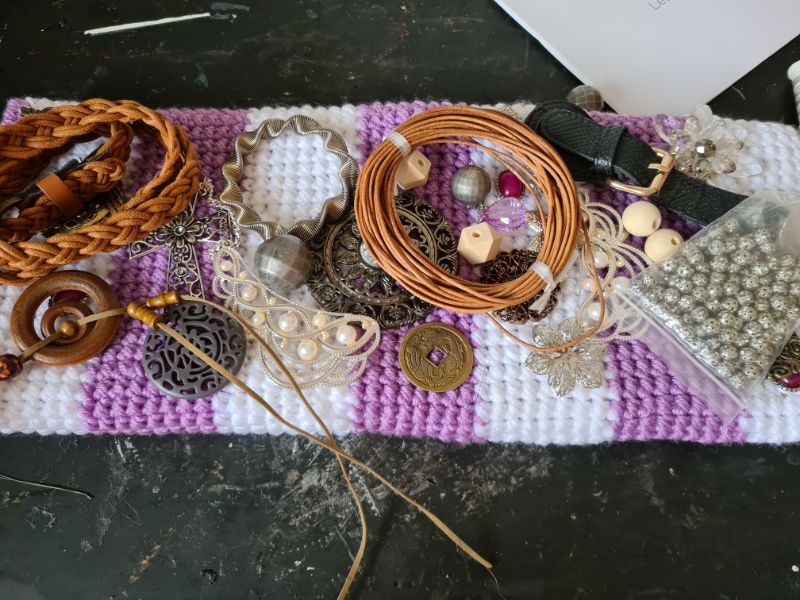
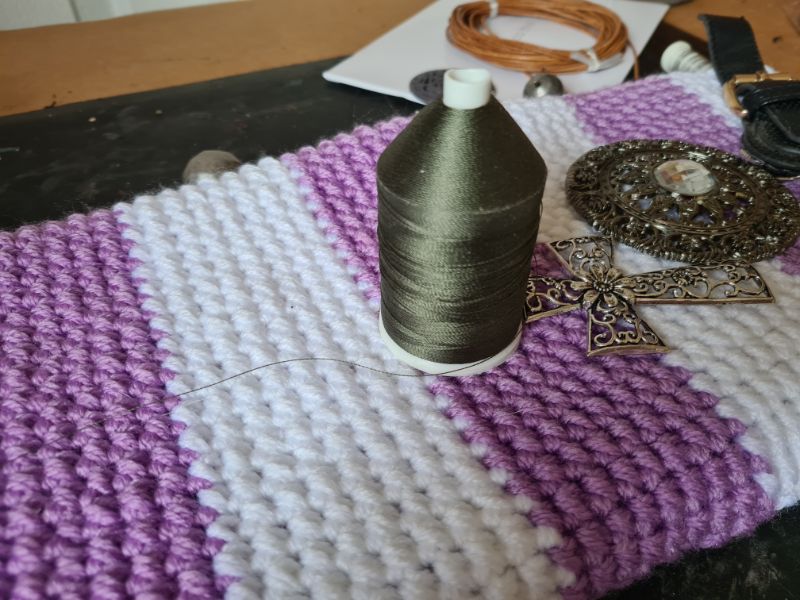
Use heavy-duty cotton thread and stitch through multiple crochet loops for strength.
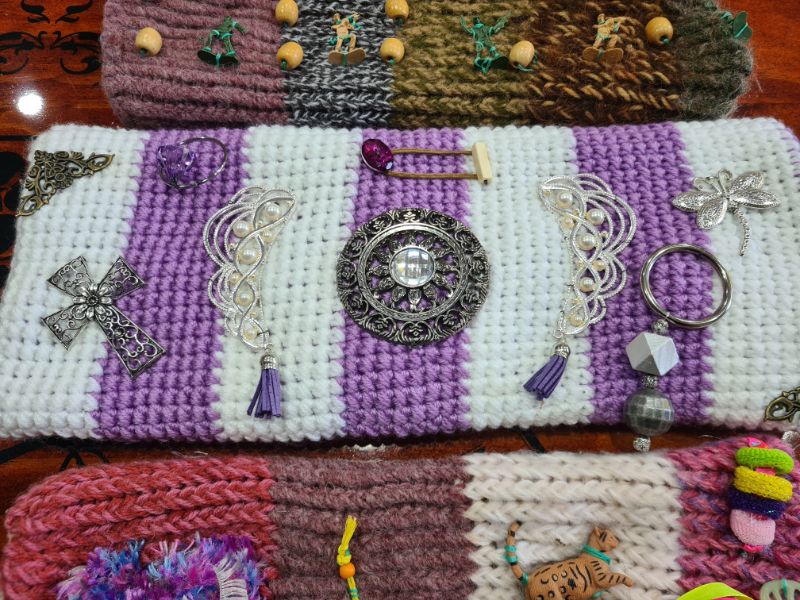
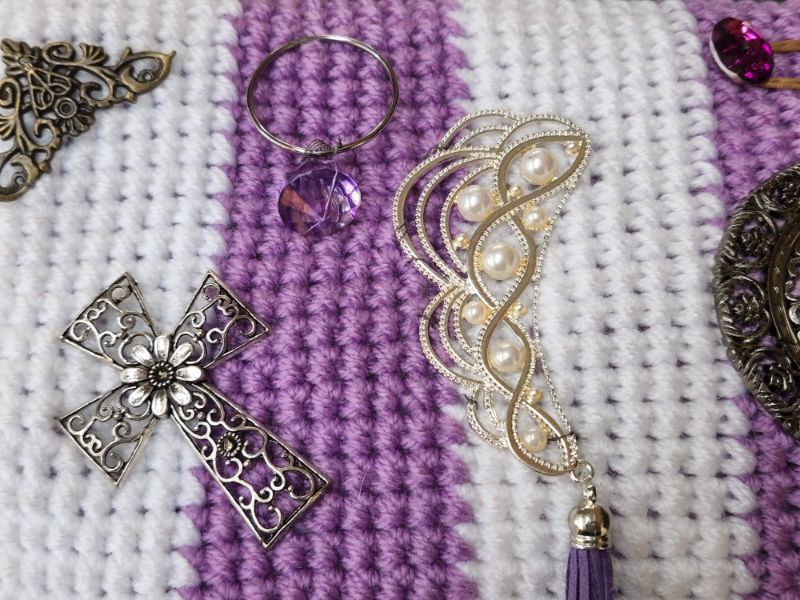
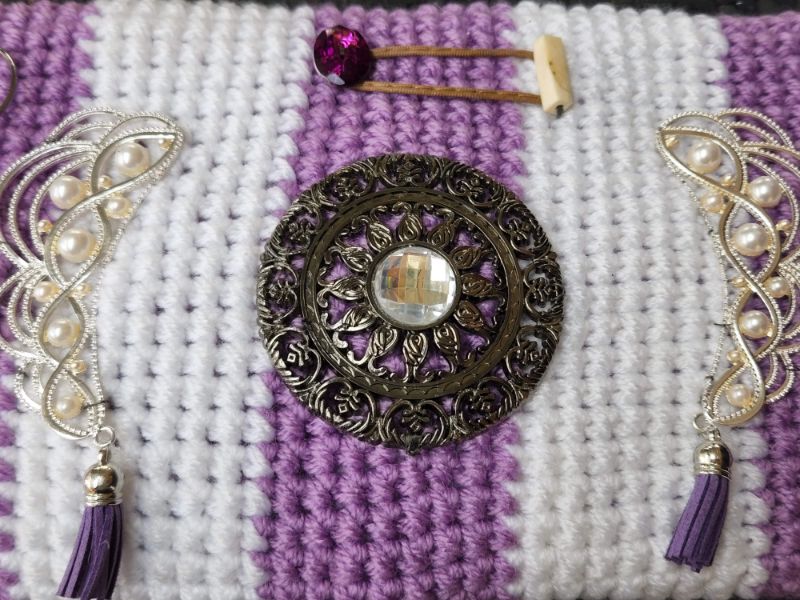
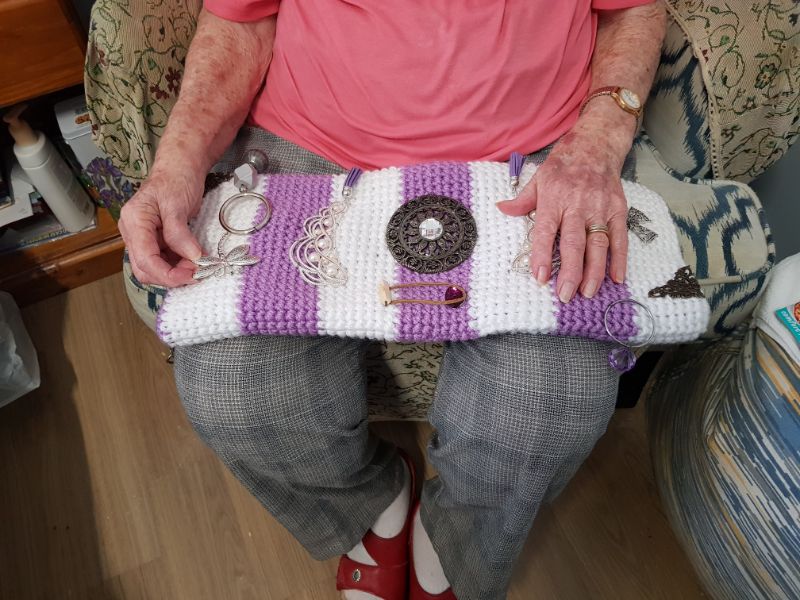
I stitched on a broken pearl necklace—smooth against the skin—with soft leather tassels for contrast. Metal hoops from an old handbag strap add a cool, solid feel; I threaded a colourful plastic bead through one ring for a gentle slide. A cross pendant sits near the top for those who find comfort in faith.
Create a simple closure to fidget with
Sew a sturdy button and a cord loop. The open-and-close action is satisfying and familiar. For a focal element, I stitched down a large textured plastic disc with a cool stone centre—great for temperature contrast and easy to find without looking.
Add interactive elements (movement and “little wins”)
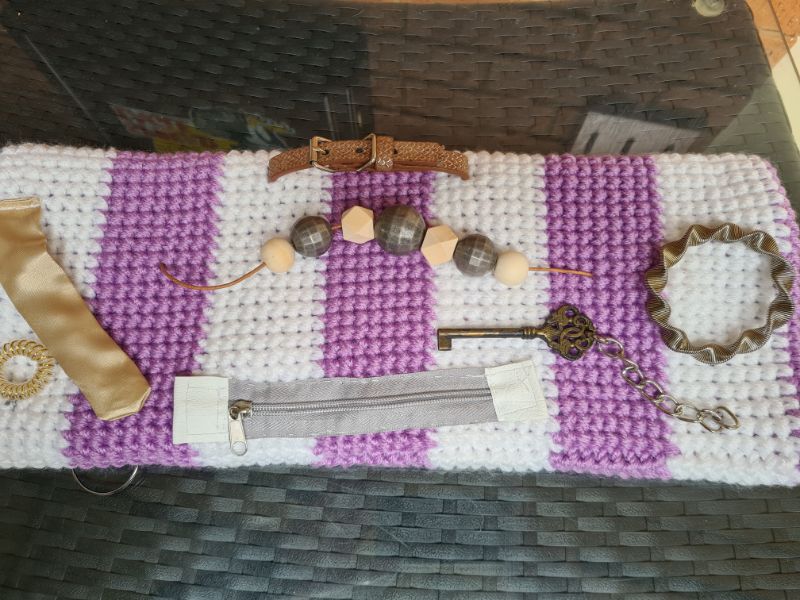
Thread another handbag loop with mixed-shape beads so they roll and click softly.
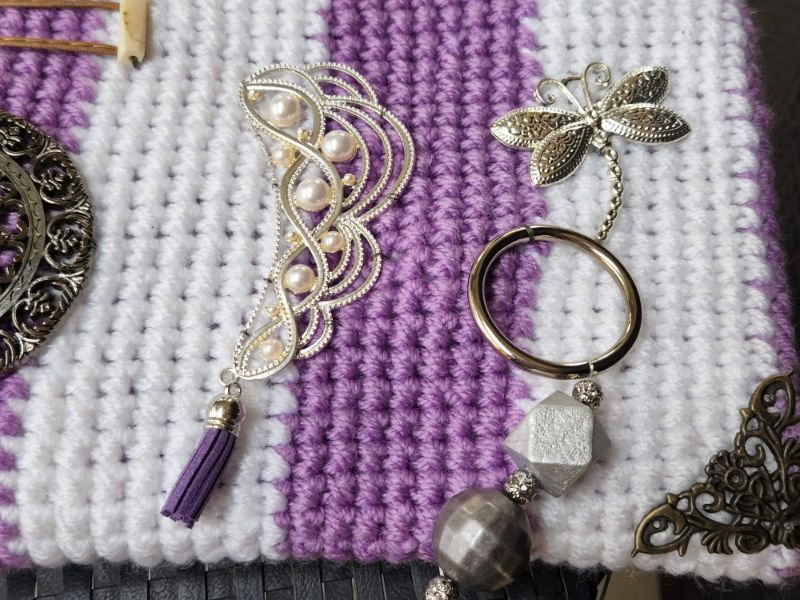
Fill one side tube with a handful of smooth beads and leave it open, so hands can slide in and move the beads—the hidden movement is calming.
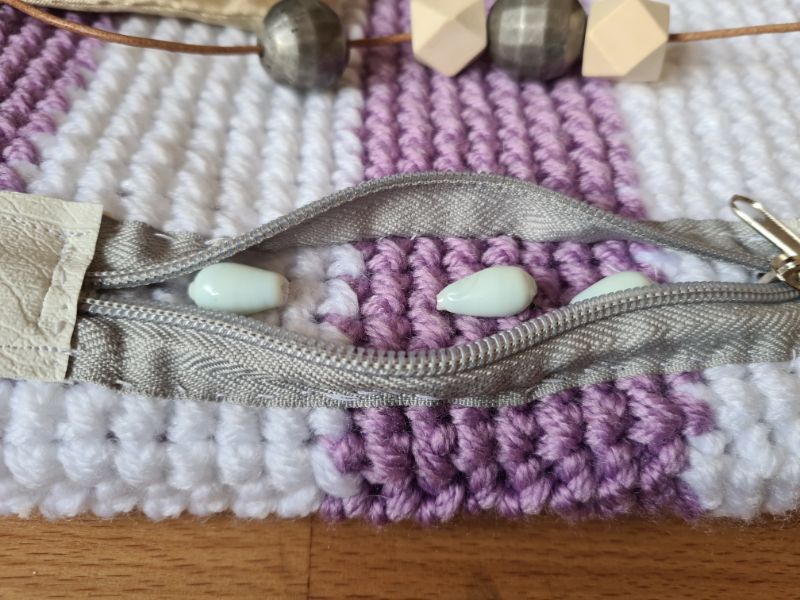
Then add a medium zip pocket or panel. Opening a zip to “something” feels rewarding, so I secured a few beads inside.
Shorten a belt strap and attach it firmly; residents love buckling and unbuckling. String oversized beads onto a shoelace and anchor both ends so the beads can slide but not come off.
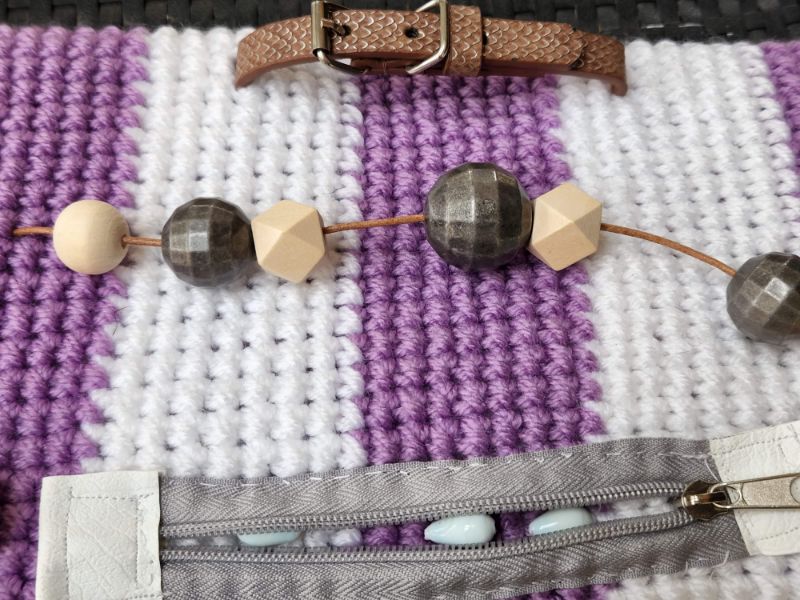
Sew a satin fabric tube, fill with a few beads, and stitch down each end—this glides under the fingers.
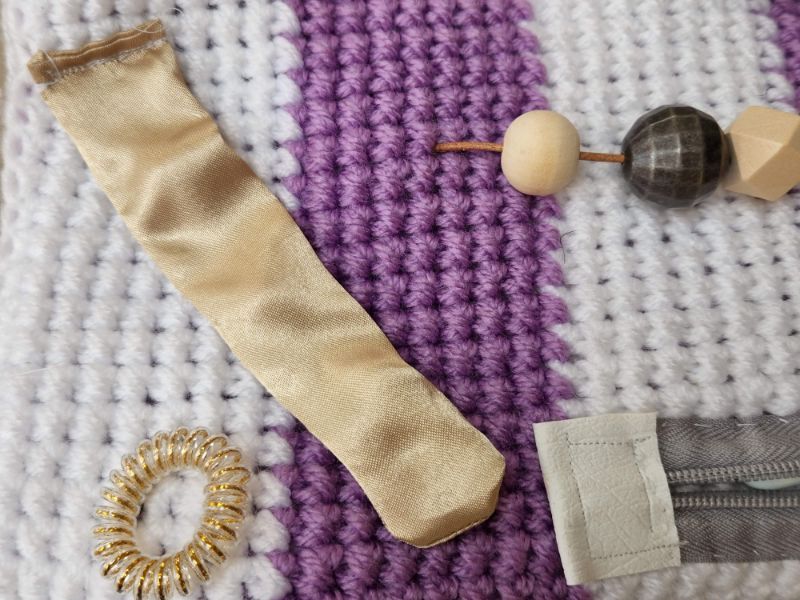
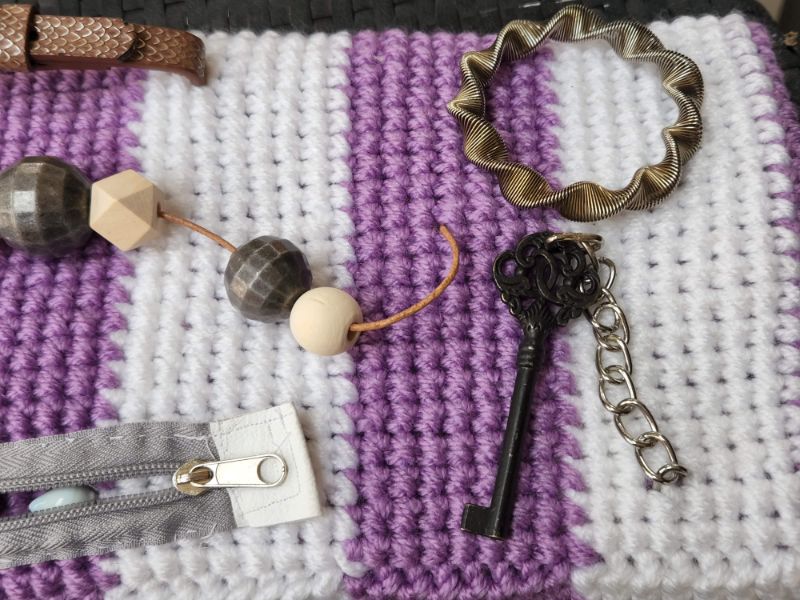
Finish with a large key on a light chain and a pair of shirt-sleeve holders for gentle spring resistance.
Finishing, testing and care
Trim threads, seal any synthetic cord ends, and run a full tug-test on every piece. Rub the mat against clothing to spot potential snags. Spot-clean with a damp cloth and mild soap; avoid soaking metal pieces. Re-check stitching regularly and remove or repair any loose items straight away. Always supervise use and tailor features to the person’s abilities and preferences.
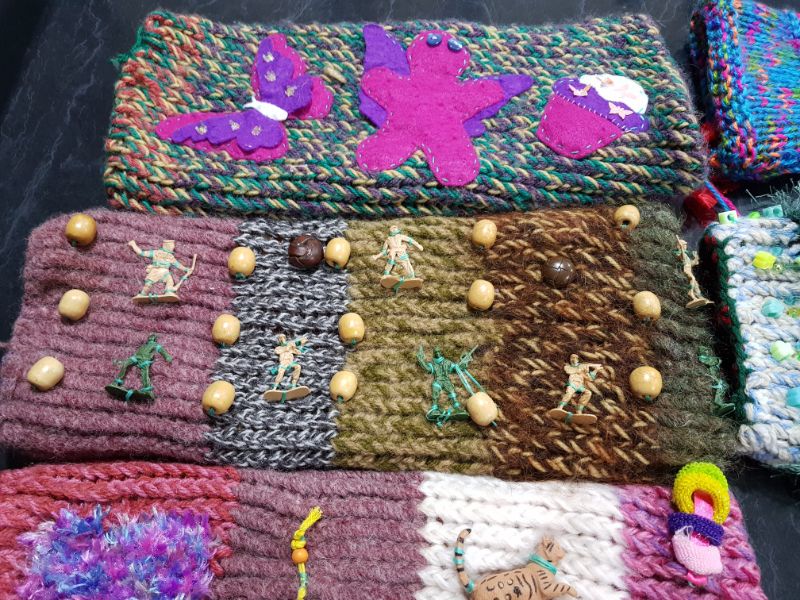
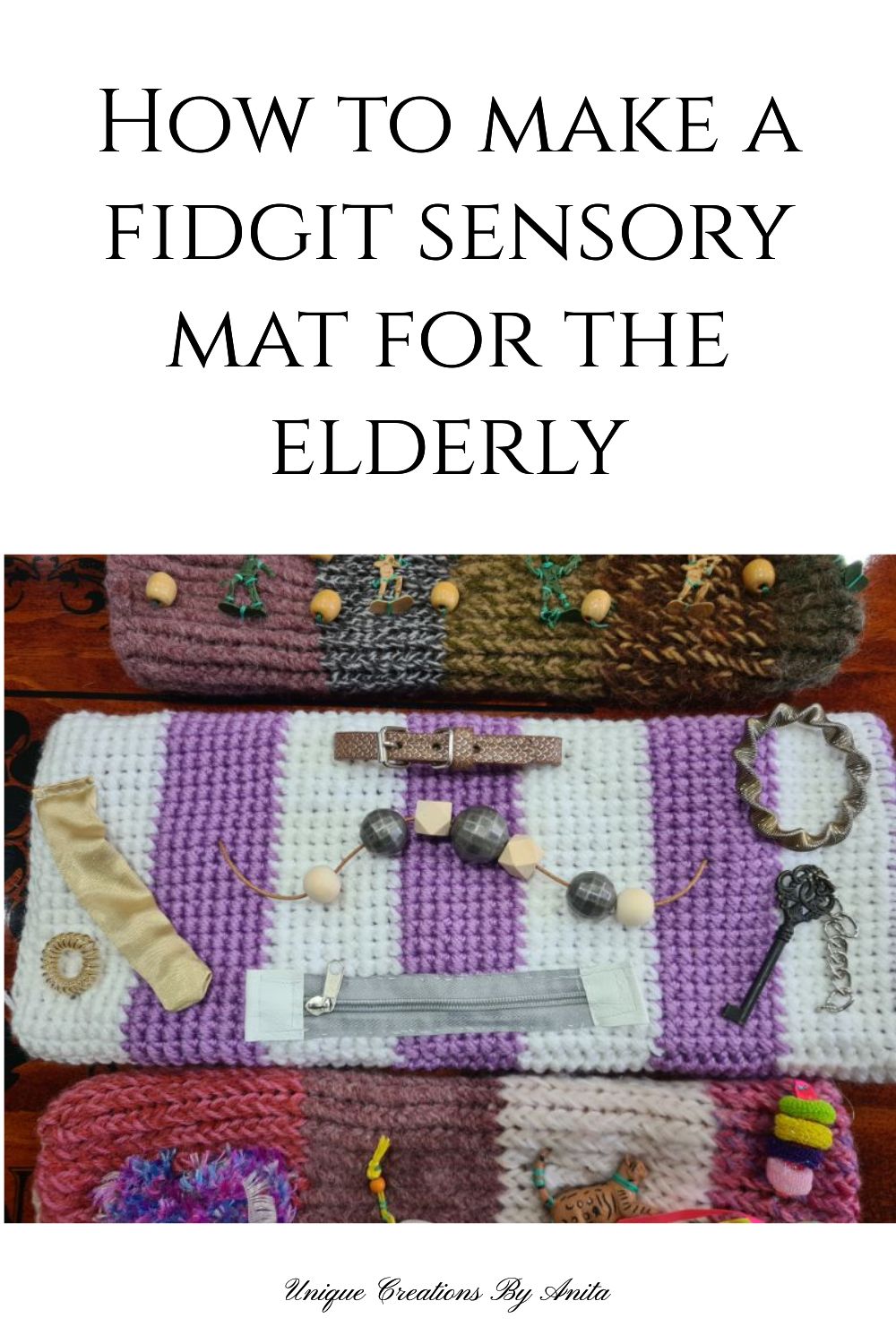
There are many styles of dementia sensory mats. Here are a few we use at our facility. The mat I made includes items that differ from the standard design, yet it has had the same calming effect. I also focus on age-appropriate pieces that our residents relate to.
Variations and ideas
Use ribbons to practise simple knots or bows. Swap the belt for snap fasteners if buckles are tricky. Add fabric swatches—corduroy, satin, velvet—for richer contrast. Consider a name tag or photo pouch to spark conversation. Charity shops are goldmines for safe, interesting textures—look for chunky jewellery, bag hardware, and sturdy trims.
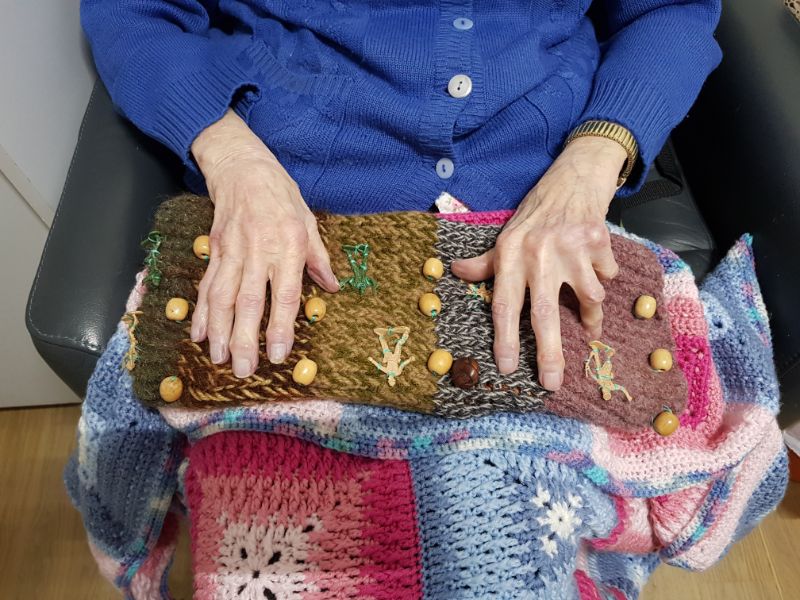
My mat was a huge hit with the residents—everyone wanted to have a go, whether they were living with dementia or not.
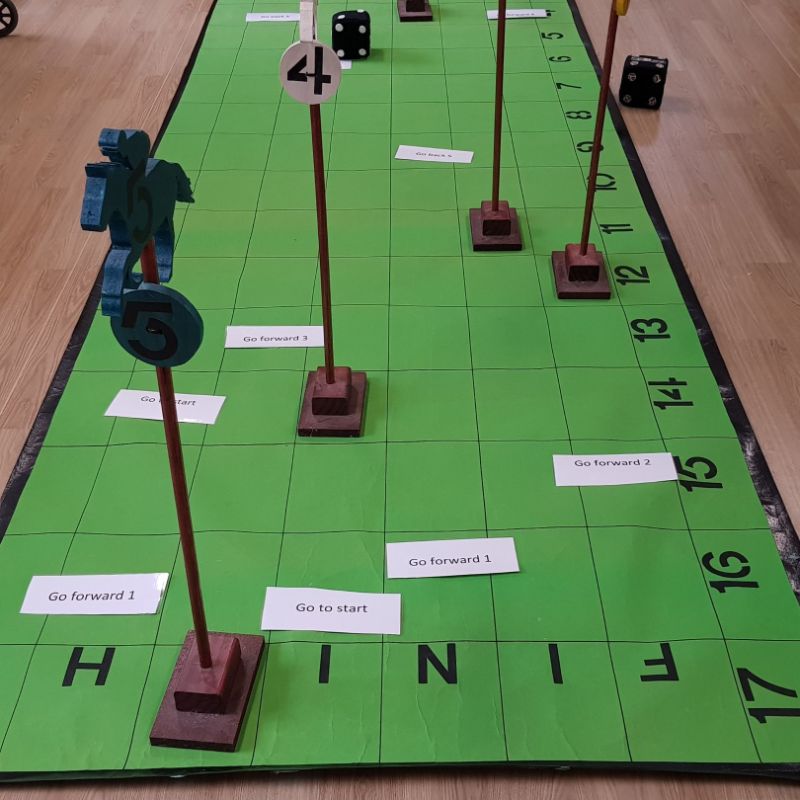
Our residents adore this DIY horse racing game for group activities.
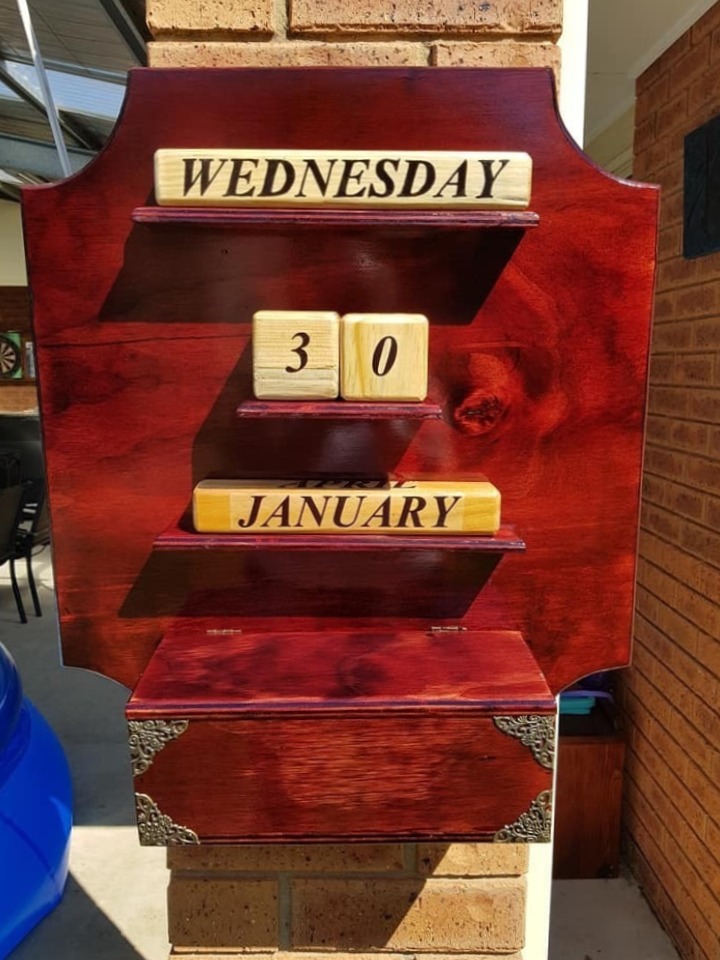
This large-print perpetual calendar helps everyone keep track of the day and date at a glance.
More about IBC

If you follow my blog, you will know I am part of the IBC (International Bloggers Club), which is a group of talented bloggers from around the world. We have members from Spain, South Africa, Australia, the United States, and Canada. Each month, we come together and create a project with a common theme.
If you missed last month’s “Pleatherable Leather” theme, here is the link to my Geometric leather lion wall hanging. The “Hooked on Crochet ” contributions from my fellow bloggers for this month’s challenge are listed below. Please feel free to jump over and give them some love.
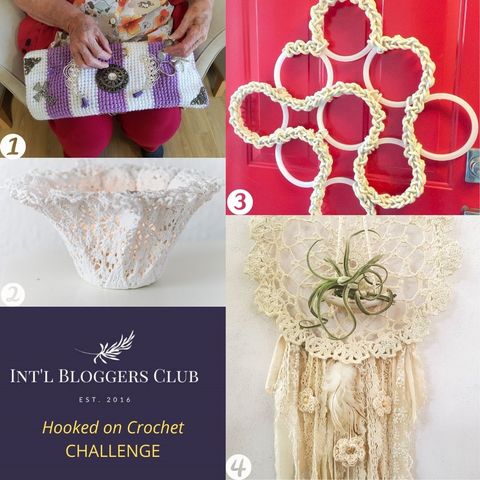
- Me
- Songbird| More fun with plaster and doilies
- Birdz of a feather | Crochet wall hanging pattern
- A Crafty Mix|Doily air plant holder

If you’re interested in any of the items used in this project, we’d appreciate it if you used our affiliate links. Clicking these links earns us a small commission at no extra cost to you, helping us create more inspiring and exciting projects to share. We’d also love to hear your thoughts—feel free to leave a comment or share this post!


23 Comments
A Crafty Mix | Broken Pot and Doily Air Plant Holder - A Crafty Mix
May 23, 2022 at 10:03 pm[…] Anita did something truly special with her challenge and created a dementia sensory mat. […]
Sara
May 23, 2022 at 10:39 pmI LOVE LOVE LOVE this Anita! Especially how you got scrappy for the challenge and had a co-worker help out 🤣. All kidding aside, I hadn’t even heard about this when my mom had dementia and wish I had! I know she would have enjoyed it!
Anita Holland
May 23, 2022 at 10:45 pmThey are so simple yet have so many benefits. We have one resident that is always so agitated we put a mat in front of her and she plays with the items and becomes so contented.
Michelle Leslie
May 23, 2022 at 11:55 pmThis is such a special project, Anita. A few months back my Mom had a really bad bladder infection that the doctors didn’t pick up and I was really worried that it might be dementia. I have no experience with these things whatsoever. Would it be a good idea to add things that are meaningful? JUst asking coz then I can chat to my Mom and maybe we can make one together just in case.
Anita Holland
May 27, 2022 at 3:12 pmThank you so much Michelle, it would defiantly be a good idea to have some personal items.
Michelle
May 24, 2022 at 12:32 amWhat a clever idea! I’ve never seen anything like it before.
Michelle
https://mybijoulifeonline.com
Anita Holland
May 27, 2022 at 3:14 pmThank you so much Michelle.
maria
May 24, 2022 at 12:41 amI love this idea. I think we all should have this. Its true special project because it can help so many suffering from this diseases.
Anita Holland
May 27, 2022 at 3:15 pmThanks Maria, it is a special activity for people with dementia.
Crissy
May 24, 2022 at 2:16 amWhat a wonderful idea, Anita! I love that this has a very special purpose, and I’m sure there are many families out there that would love to make something like this for a loved one. Thanks for sharing. Pinned!
Anita Holland
May 27, 2022 at 3:15 pmThank Crissy, that is so true and they are really cheap to make also.
Kristin salazar
May 24, 2022 at 3:33 amThis is so beautiful in so many ways! My mom had dementia and this would have come in handy. She loved to carry framed pictures around so I eventually added them into a small album that she could take with her and show everyone in memory care. You are such an incredible person to help. Pinned 🙂
Anita Holland
May 27, 2022 at 3:16 pmThank is so special Kristin.
Kippi Ohern
May 24, 2022 at 1:43 pmAnother amazing idea! I know these mats will delight the owners.
Happy Spring,
Kippi
Anita Holland
May 27, 2022 at 3:16 pmThank you Kippi.
Marie - Interior Frugalista
May 25, 2022 at 3:34 amI know firsthand how valuable these sensory mats are for those suffering from dementia. I made one for my mom when she was in a memory care unit to keep her fidgeting hands busy while sitting in her wheelchair. My only regret is not making it when she was first diagnosed! Great idea making a small crochet mat and I love all the sensory items you added to yours! Pinned 🙂
P.S. I hated missing our challenge this month because I quite enjoy crocheting.
Anita Holland
May 27, 2022 at 3:18 pmThanks Maria. It is so great to see the difference that makes to our elderly. We will catch up on the next challenge, you were definetly missed.
Marie
June 1, 2022 at 2:47 amI’ve never heard of this! What a great idea!
Anita Holland
June 5, 2022 at 11:24 amThanks Marie, they have so many benefits for the resident.
Lynne Zemaitis
June 1, 2022 at 9:52 amWhat a wonderful idea, Anita. My mother suffers from Alzheimer’s disease and this would have been so helpful for her. Thank you for sharing.
Anita Holland
June 5, 2022 at 11:25 amThanks Lynne, sorry to hear about your mother. It is a very cruel disease.
Kathleen Kirchoff
July 8, 2022 at 2:33 pmI have lost my father and several family members to dementia so I especially appreciate this. I can see this being useful for my special needs students as well. I will share this with my crocheting daughter who gives “Dementia Tours” for med students who rotate through the Geriatric practice where she works. It would be a good use of her crafty materials she could share at work.
Anita Holland
July 9, 2022 at 8:36 amSorry to hear about your father, it is a very cruel disease. I think it would also benefit special needs students. Thanks so much for sharing.